Release date: 2026.07.03Source: Conference News
MAINZ, Germany — Exchange and cooperation between China and Germany in the development of zero-carbon industrial parks are deepening significantly. During the 3rd Sino-European Corporate ESG Best Practices Conference held recently in Mainz, a dedicated sub-forum on "Zero-Carbon Parks," organized by the China International Investment Promotion Agency (Germany), took place with great success.
Centering on the theme "Systemic Lifecycle Design: China-Germany Cooperation Strategies for a Zero-Carbon Industrial Ecosystem," the event brought together representatives from financial institutions, energy agencies, certification bodies, local governments, industrial parks, and corporate sectors from both nations. Participants engaged in in-depth discussions surrounding green finance, the green transformation of industrial parks, and international standard certification.
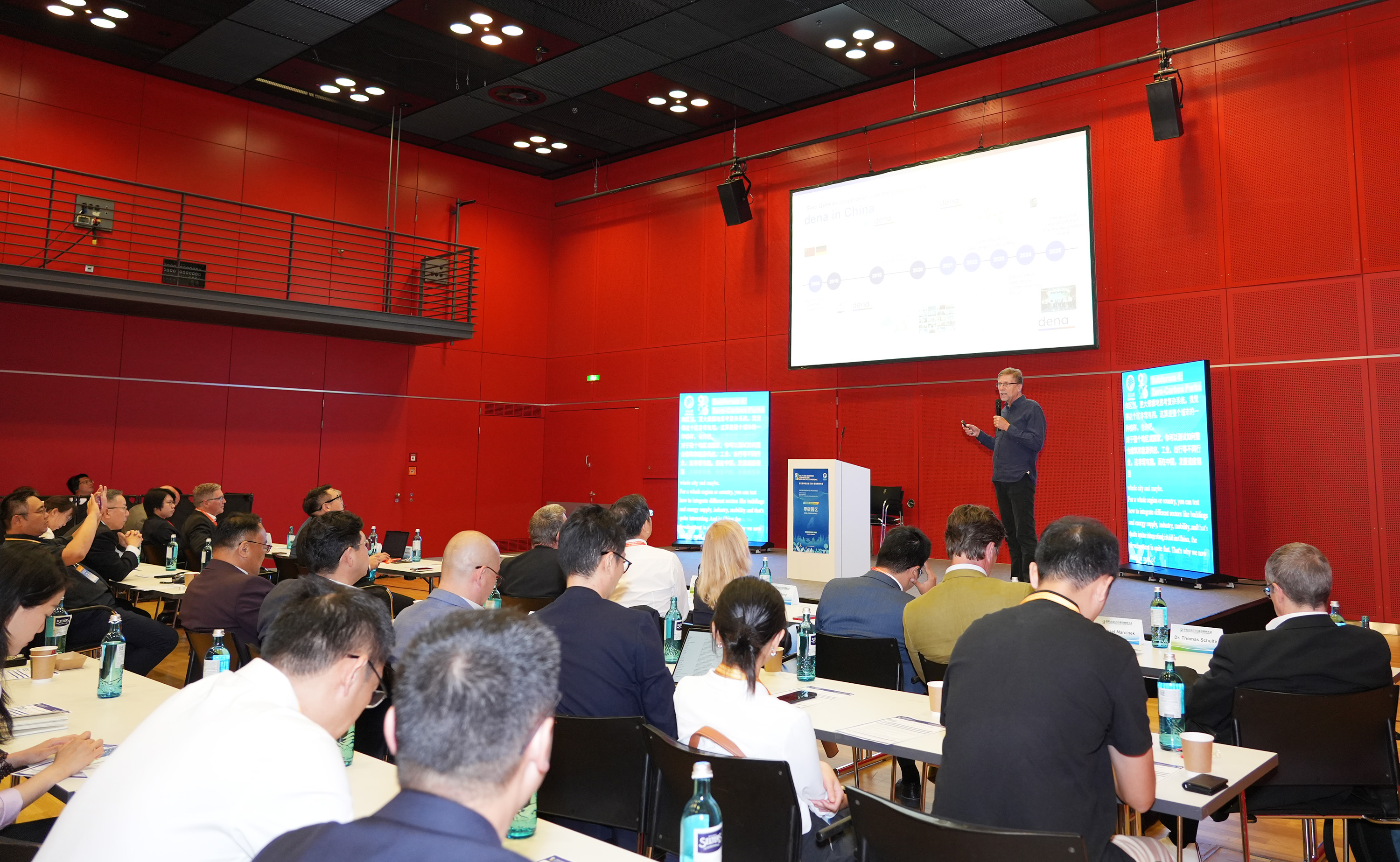
Photo: The "Zero-Carbon Parks" sub-forum of the 3rd China-Europe Corporate ESG Best Practices Conference was recently held in Mainz, Germany.
At the sub-forum, Shen Huayu, Deputy General Manager of the International Business Department at China Construction Bank, detailed the bank's practical initiatives in green finance. Thilo Cunz, Director of International Buildings Department at the German Energy Agency, shared Germany's experiences and practices in urban energy transition, regional climate neutrality roadmaps, and municipal heating planning. Additionally, Johannes Kreissig, CEO of the German Sustainable Building Council (DGNB), introduced a comprehensive sustainability certification system covering individual buildings, urban districts, and industrial parks. Željko Knežević, Managing Director of Industrial Services Germany at TÜV Rheinland Group, highlighted the group's professional services spanning carbon inventory, carbon footprint accounting, reduction pathway design, carbon neutrality certification, and workforce capability building.
Wang Tao, Vice Mayor of Rongcheng City, Shandong Province of China, presented a case study showcasing local practices in building a zero-carbon city. Leveraging its advantages in clean energy—including nuclear, wind, solar, and energy storage—alongside rich blue carbon and ecological carbon sink resources, Rongcheng is actively exploring pathfinding approaches across zero-carbon industry, zero-carbon ecology, zero-carbon lifestyle, and zero-carbon international exchange.
Wang Heng, President of Liaoning Chamber of Commerce in Germany and Chairman of the Shengheng Law Firm, shared key practices from Liaoning Province regarding the promotion of green and low-carbon transition, optimization of the business environment, and deepening of industrial cooperation between China and Europe.
During the panel discussion, industry leaders exchanged insights on topics such as green energy supply, low-carbon construction, energy storage technology, supply chain decarbonization, retrofitting existing structures, and aligning international standards. Panelists included Dr. Thomas Schulte, Senior Vice President and Head of Sustainability and EHS at Bosch Group; Huang Feng, Chairman of the Shanghai Foreign Investment Association; Michael Masinek, Board Member of Garbe Industrial GmbH & Co. KG.; Antje Vargas, CEO of GeoClimaDesign AG; and Jia Chao, President of the European Business Center at LONGi Green Energy Technology Co., Ltd.
The panelists emphasized that zero-carbon parks serve not only as vital vehicles for industrial green transformation, but also as pivotal platforms for fostering technological collaboration, standard alignment, and project execution among Chinese and German enterprises.
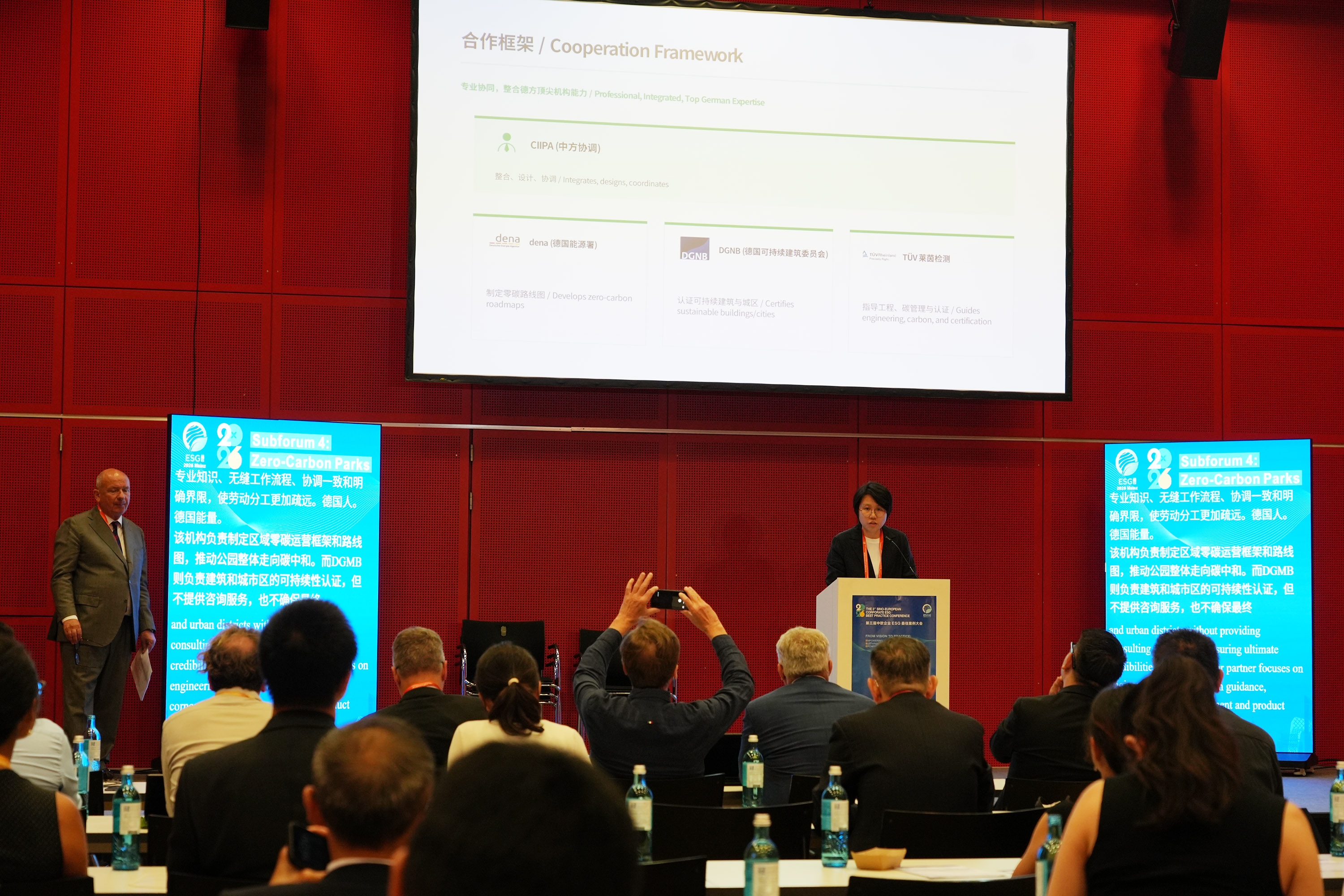
Photo: The "Zero-Carbon Parks" sub-forum of the 3rd China-Europe Corporate ESG Best Practices Conference was recently held in Mainz, Germany.
Introducing the background of the event, Li Jiyang, Executive Director of the China International Investment Promotion Agency (Germany), noted that as green regulations such as the EU Carbon Border Adjustment Mechanism (CBAM) and product carbon footprint standards take effect, green power, carbon data management, and international certification capabilities are becoming essential pillars for industrial parks to enhance their global competitiveness.
In a joint move to inject fresh momentum into Sino-European cooperation, the China International Investment Promotion Center (Germany), the German Energy Agency (dena), the German Sustainable Building Council (DGNB), and TÜV Rheinland launched a collective initiative. The initiative calls for pooling professional resources to build an integrated service mechanism for zero-carbon transformation across all stages—including park planning, construction, and operation—ensuring seamless alignment in roadmap formulation, evaluation & certification, and carbon management.


 Stresemannallee 19-23,60596 Frankfurt am Main,Germany
 +49 6975085557, +49 6975085553
 info@cneuesg.com
All Rights Reserved By
Organizing Secretariat of Sino-European Corporate ESG Best PracticeConference